-
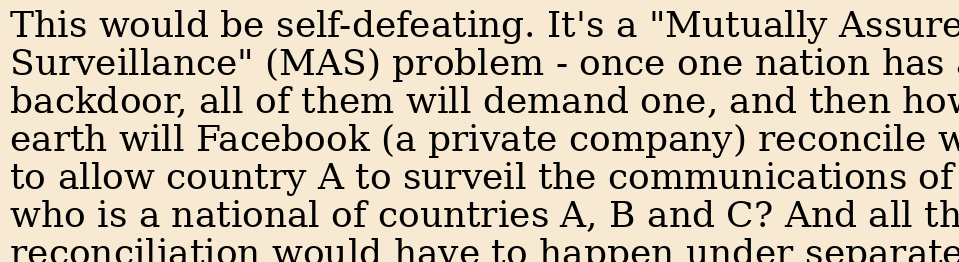
“Mutually Assured Surveillance” (MAS) — what will be the National Security playbook towards platform adoption of End-to-End Encryption for the next 5 years?
There is a lot of end-to-end encrypted messenger tooling available to the general public: iMessage (Q: why does everyone forget iMessage? A: because it’s a fabric.) WhatsApp Signal FB Messenger (parts of) Telegram (parts of) Google (parts of) Wire Threema Matrix … It might be tempting to presume from this that end-to-end encryption is inevitable,
-

This is a *wonderful* set of TikTok videos which help demonstrate the gulf between the “one size fits all” Internet that some people call for, versus actual diversity of User Experience #UX
featured image: screencap from serafinakarla16’s video, showing filtered “lips” I believe that it will be beneficial for you to watch these videos … So there’s this filter/lens called “Belle” going around on TikTok at the moment; if you’re not at all familiar with this concept you’re probably best-off thinking of it as “digital makeup effects
-
Two posts on reverse-engineering #PokemonGo
Via Alex Butcher. If I weren’t already so busy I would be using this as an excuse to brush up my advanced Lua… https://www.romainthomas.fr/post/21-11-pgsharp-analysis/ https://www.romainthomas.fr/post/21-07-pokemongo-anti-frida-jailbreak-bypass/
-
Michigan poised to ban most state workers’ use of encrypted messaging | I’ve absolutely no problem with an employer (e.g. The Government) banning employees from conducting work over E2EE …
… not least, it provides business opportunities for all manner of small per-nation escrowed-access startup messengers which can leak sensitive content all over the Web once they are inevitably hacked. The important thing is that the public-at-large need not suffer the same fate: The Michigan State Senate voted unanimously on Tuesday to block state workers
-
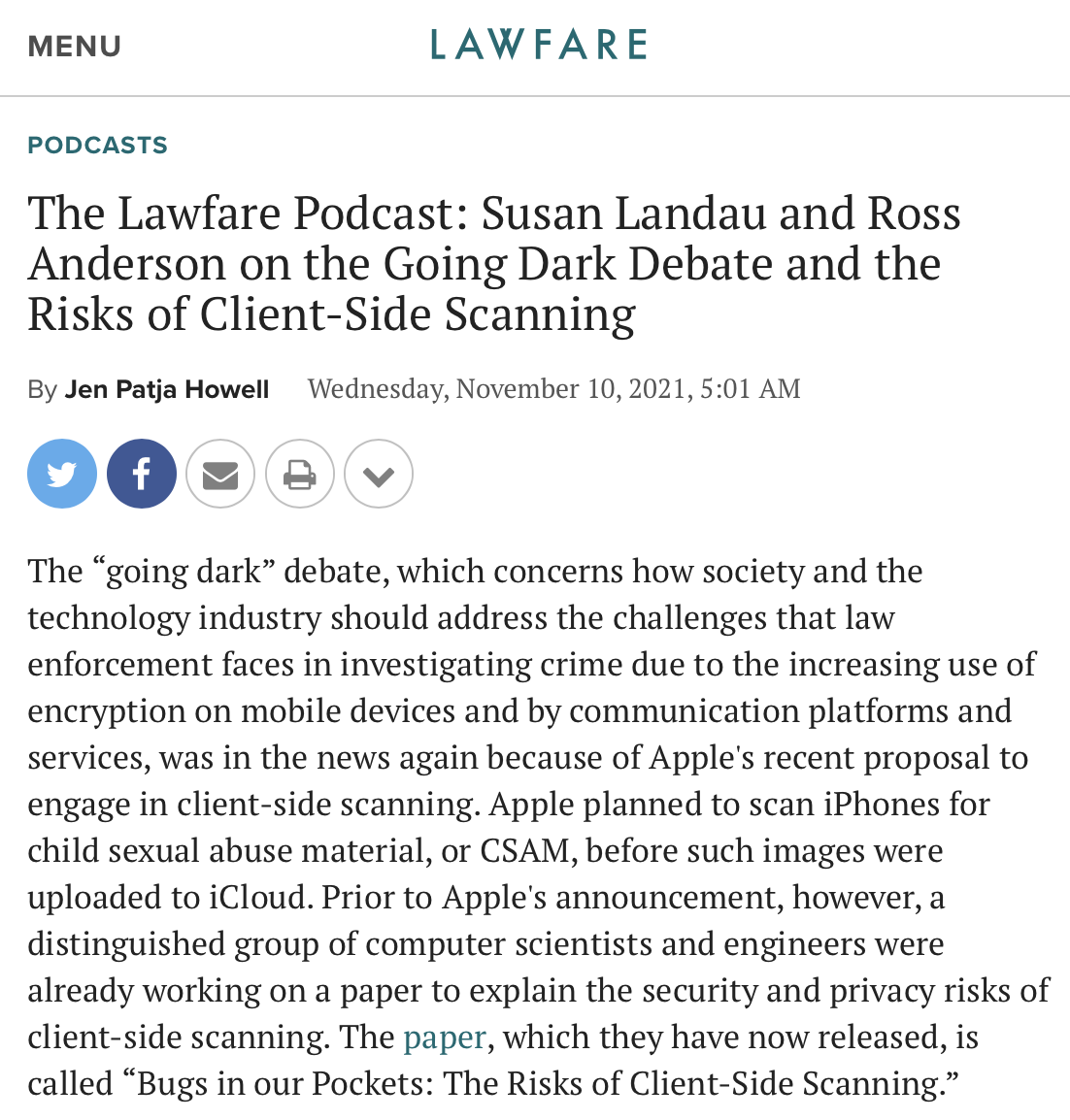
The Lawfare Podcast: Susan Landau & Ross Anderson on the Going Dark Debate & the Risks of Client-Side Scanning – Lawfare | #SusanLandau & @rossjanderson on the Apple/CSAM, via @webdevlaw; #MUSTLISTEN
An impressive, and important podcast — well worth the investment of an hour to hear two Professors (and co-authors of “Bugs in Our Pockets”) analysing the Apple CSAM Surveillance proposal: To talk about this most recent development in the going dark debate, Stephanie Pell sat down with two of the paper’s authors: Susan Landau, Bridge
-
Using SOUNDEX / Homophones / Misspellyngs & Scope Expansions to bypass Social Media Censorship and Blocks
I honestly have no idea why a basic search for “Kyle Rittenhouse” on Facebook should bring up zero results; it might be an intentional attempt to limit access to abusive UGC, or it might be that the keywords have become associated with abusive content somewhere inside Facebook’s automated abuse-blocking systems, or it might be a
-
TikTok reveals details of how its coveted algorithm works – Axios
The beleaguered app describes the inner workings of its video-selection code. Source: TikTok reveals details of how its coveted algorithm works – Axios
-
Why TikTok made its user so obsessive? The AI Algorithm that got you hooked. | by Catherine Wang | Towards Data Science
Tick Tok is taking the world by storm. The short video app was downloaded 2 billion times, so what is the magic behind it ? Source: Why TikTok made its user so obsessive? The AI Algorithm that got you hooked. | by Catherine Wang | Towards Data Science
-
“Comprehensive Guide to build Recommendation Engine from scratch” — I kinda wish that any pundit writing about (e.g. newsfeed) “algorithms” was required to build one like this, first.
This is a comprehensive guide to building recommendation engines from scratch in Python. Learn to build a recommendation engine using matrix factorization. Source: Comprehensive Guide to build Recommendation Engine from scratch
-
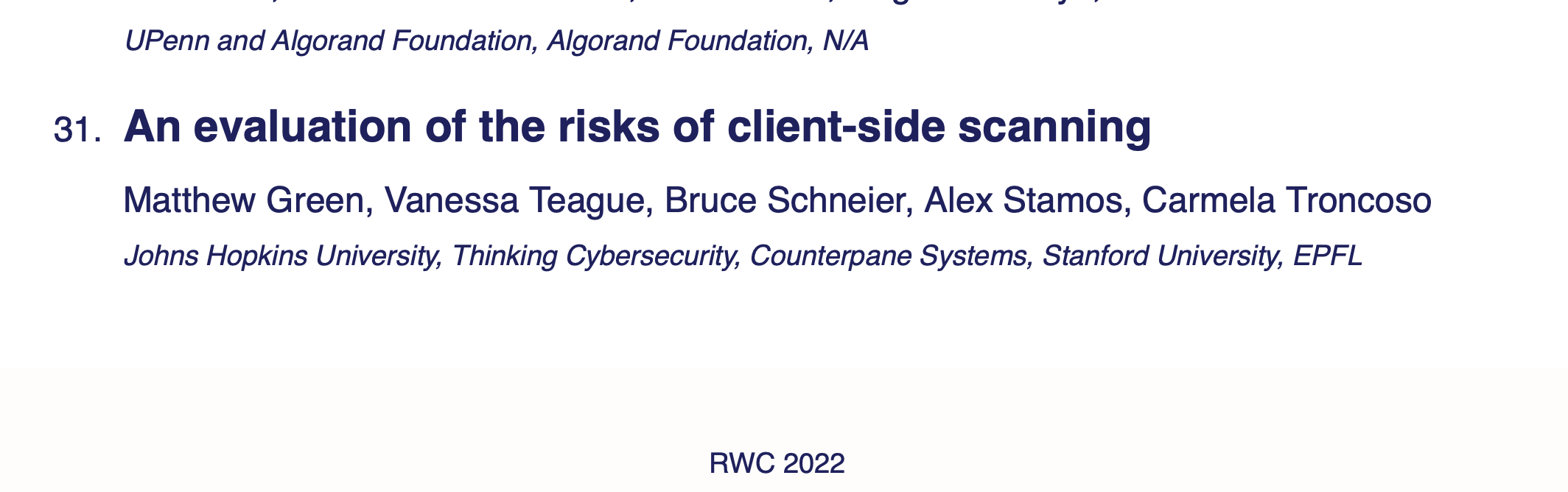
#RealWorldCryptography 2022: Accepted Talk Proposals
This: https://rwc.iacr.org/2022/acceptedpapers.php Notably: 31. An evaluation of the risks of client-side scanningMatthew Green, Vanessa Teague, Bruce Schneier, Alex Stamos, Carmela Troncoso Johns Hopkins University, Thinking Cybersecurity, Counterpane Systems, Stanford University, EPFL
-
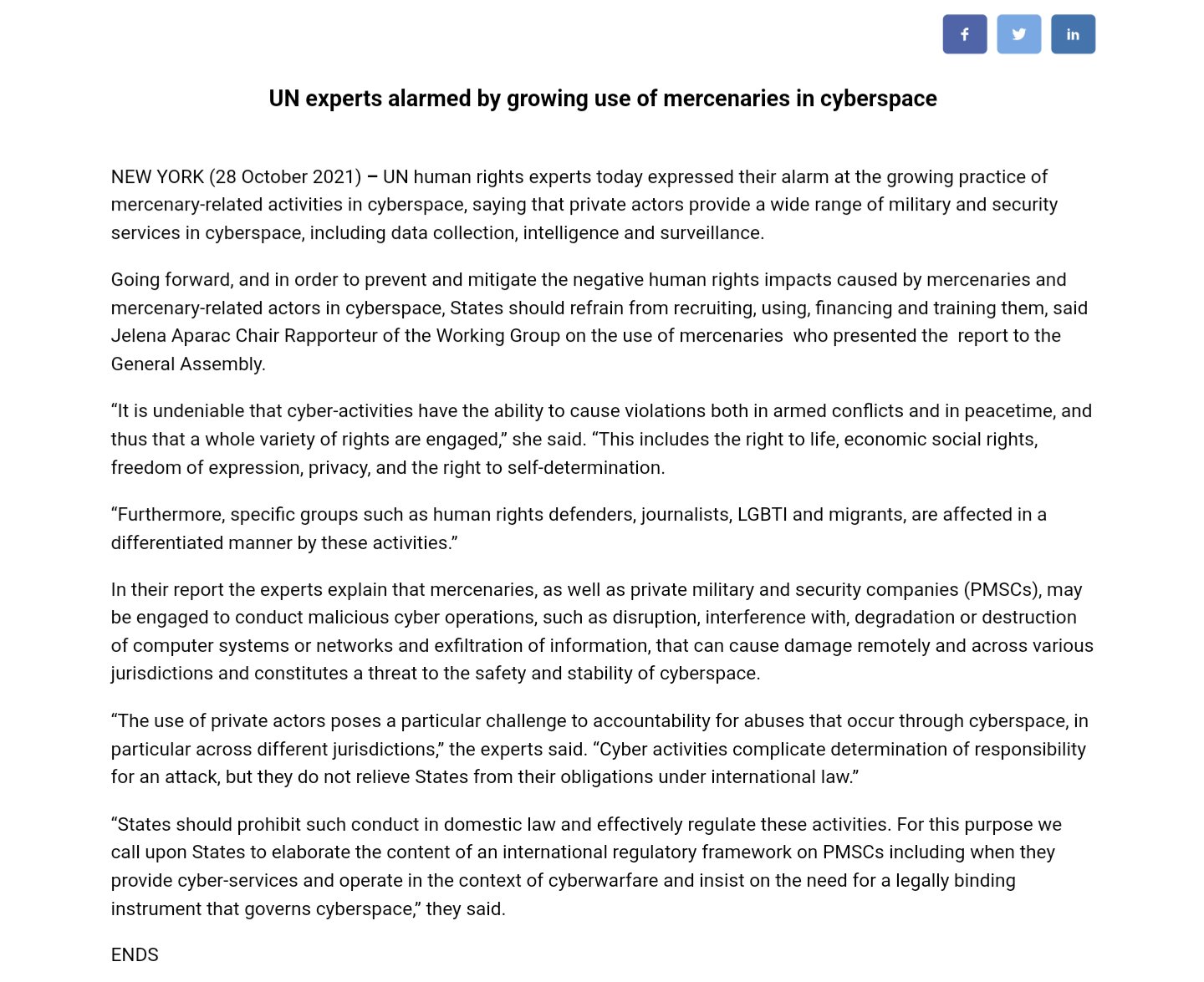
Discussion with @runasand: “One Nation’s Cybermercinaries are another’s Ethical Hackers”, per the @UN
Runa: Good point from @UN human rights experts on the use of mercenaries in cyberspace: “The use of private actors poses a particular challenge to accountability for abuses that occur through cyberspace, in particular across different jurisdictions.” https://www.ohchr.org/SP/NewsEvents/Pages/DisplayNews.aspx?NewsID=27729&LangID=E Alec: White Hat Hackers: “Do they mean [me]?” R: No. A: Hard disagree. The fallacy of cyber