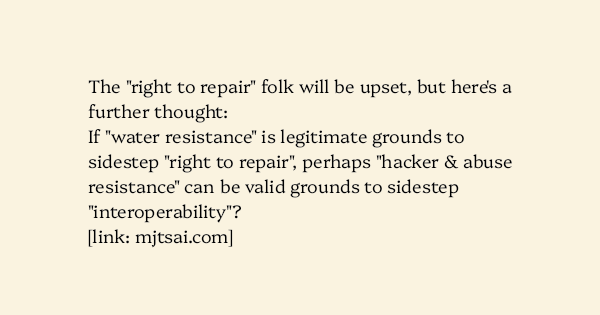
The “right to repair” folk will be upset, but here’s a further thought:
If “water resistance” is legitimate grounds to sidestep “right to repair”, perhaps “hacker & abuse resistance” can be valid grounds to sidestep “interoperability”?
by Alec Muffett
The “right to repair” folk will be upset, but here’s a further thought:
If “water resistance” is legitimate grounds to sidestep “right to repair”, perhaps “hacker & abuse resistance” can be valid grounds to sidestep “interoperability”?
perhaps “hacker & abuse resistance” can be valid grounds to sidestep “interoperability”?
That is why (open) protocols and formats are the most important features of any service. That is where the security focus starts and ends.
When this is forgotten, then locking down the code and/or hardware starts to look like a necessity.
Yeeeeeees, but at some point locking down the hardware is also a necessity because “hardware key stores” and trusted platform modules exist
Leave a Reply