I’ll keep this brief:
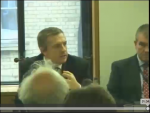
Yesterday I attended the Parliament and Internet conference in Westminster.
In one of the sessions a lady asked a question about why she had her identity used by fraudsters when so little of her personal information was on the internet.
Video of the session is here – fast forward the slider to the 01:31:30 mark – however the audio drops out occasionally due to a camera fault. Alternative WAV audio is here, complete but a bit noisy.
Andy said some very sensible things which humourously contrasted with responses to a question raised earlier by Helen Goodman MP (WAV) hence the audience laughter.
Smith is getting mildly roasted in the media:
A senior government official has sparked anger by advising internet users to give fake details to websites to protect their security.
Andy Smith, an internet security chief at the Cabinet Office, said people should only give accurate details to trusted sites such as government ones.
He said names and addresses posted on social networking sites “can be used against you” by criminals.
His advice was described by Labour MP Helen Goodman as “totally outrageous”.
Ms Goodman, shadow culture minister, told BBC News: “This is the kind of behaviour that, in the end, promotes crime.
And also:
http://www.independent.co.uk/news/uk/politics/fake-ids-are-ok-says-cabinets-it-chief-8227385.html
http://news.techeye.net/security/top-civil-servant-calls-for-brits-to-fake-online-identity
This is misrepresentative, insecure bullshit.
He was not saying that everyone should create fake IDs; he was making the perfectly reasonable suggestion that one is free to mess about with birthdates and other information online, the better to confound identity thieves.
I have said much the same – worse/moreso, even, by suggesting that folk randomise their personal information so that your mother’s maiden name was F3JlfIrOH8 and your favourite colour is uAfhaR.
Until businesses worldwide stop mistaking personal information for private information to establish identity, and/or stop losing the bloody stuff, the only wise approach to maintaining identity integrity is to either not provide the information at all and/or lie about it in some way.
I spoke to Helen Goodman MP at the break, and – in as many ways as I could muster without stressing her out – sought to establish whether she really believed that it should be illegal to “lie” when using the Internet – her argument by analogy being that one is not allowed to lie about whom one is on a driving license.
The impression I was left with was that she really does think lying is (or should be) illegal. Also I felt that she was laser-focused on the matter of saving children from cyberbullies and for some reason had concluded that the cause of the latter was “anonymity on the internet”; check out the WAV above..
I dunno about nowadays but I remember my bullies from school in a very up-close-and-personal manner.
So this is all bullshit – and then Ed Vaizey turns up and clearly is not going to say anything contentious without a brief, and the Daily Mail is reporting Simon Milner of Facebook as dressing Andy down, which I doubt happened as reported.
But let this put the record straight:
Last time I checked it is not illegal to lie about personal information except to certain arms of Government and in certain contractual situations.
I do not believe it is illegal – as Lord Erroll admits to doing – to habitually lie about your birthday. Many of my friends do similar, female more than male.
I certainly would recommend randomising the responses to your security questions, differently per website or provider, and then keeping those random responses in a safe place. This helps protect you from identity theft* and helps you spot collusion.
And anyone who thinks that this – or any other form of anonymity – is the driving force that enables cyberbullying, is someone who does not understand security. Nor human nature.
Well done, Andy, for getting it right.
—
* obligatory explanation of how identity theft really works

Leave a Reply