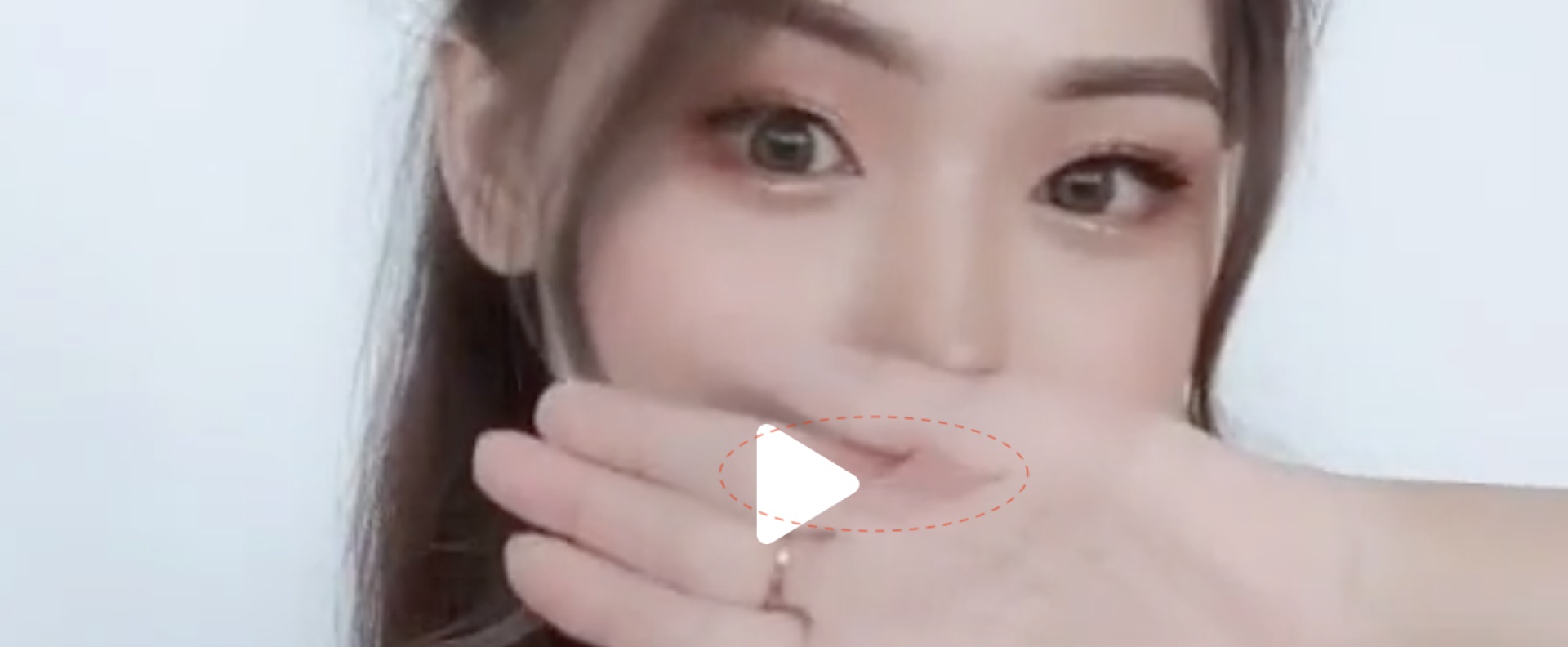
featured image: screencap from serafinakarla16’s video, showing filtered “lips”
I believe that it will be beneficial for you to watch these videos …
So there’s this filter/lens called “Belle” going around on TikTok at the moment; if you’re not at all familiar with this concept you’re probably best-off thinking of it as “digital makeup effects for your video, mostly for fun/play” — and it’s having an extraordinary reception because, well, watch this video:
nb: links are also provided in case you end up tripping TikTok’s rate limiting
…and this video (the original, clipped in the above by the stitcher/commenter):
…or maybe this one:
…and with some videos the creator is using their hands to mask-off the face so you can see what the filter is trying to do to them:
Why is this important?
We live in a mad world where some are presenting “threats to young people from unrealistic expectations on THE INTERNET” — and are legislating to inhibit free access to these resources, in the name of protecting young people from “harm”.
But as we saw in the first video of these four: People are diverse. Experience is diverse. Ability is diverse. The gifts you are born with, are diverse.
And yes, we should seek to instil into our youth the wisdom that “things which work for some people will not necessarily work for other people, and most of the time that’s okay” — yes, sometimes there’s an inequity of opportunity which needs to be addressed (such as lack of accessibility ramps at stores) but other times, very frequently, and more personally, it’s a problem “not so much”.
Some are already discovering this on their own, but we should be telling them anyway in order to normalise it; and we certainly don’t need walls to keep them away from THE INTERNET.
Instead, we should be encouraging them to each learn to swim in it, in their own way.

Leave a Reply